Your Child is Special. Their Healthcare Should Be Too
It is 2am and your child is burning up. You reach for your phone, not to call your pediatrician (because that line goes to a voicemail or a nurse triage service you have never spoken to before), but to start googling. One search leads to another, the results get scarier, and by 3am you are somewhere deep in a rabbit hole, more frightened and more alone than when you started. That feeling, the one underneath the fever and the sleeplessness, is not just worry about tonight. It is the ache of knowing that when something does not feel right with your child, you do not have a trusted voice to turn to. You are navigating it largely on your own, in a system that was never really designed with your child's individuality in mind.
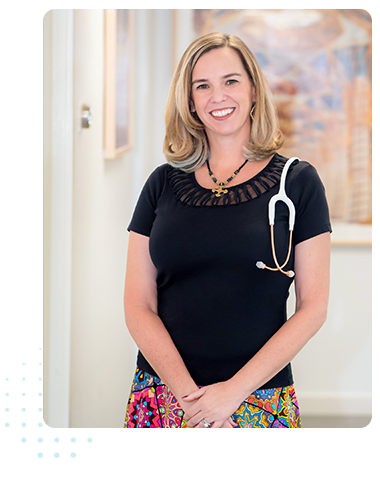
I lived the other side of that system for twenty years as a physician in traditional practice, and I watched it happen to families every single day. When I finally made the shift to a model where I could visit a newborn at home in those tender first days, where I could sit with a family for a full hour instead of a rushed ten minutes, I saw what pediatric care is genuinely capable of being. I could say yes to the depth of relationship and attention that families had always deserved but rarely received. That is the foundation of personalized medicine: treating your child as the individual they actually are, not as a slot on a schedule.
Understanding what are the pros and cons of personalized medicine is a worthy first step for any family that has ever felt unseen in a traditional practice and is ready to ask whether there is a better way forward for their child.
What is Personalized Medicine in Pediatrics?
At its heart, personalized medicine in pediatrics begins with one simple conviction: a standard protocol cannot meet the needs of every child, because every child is different. The focus shifts away from the checklist and toward the individual in front of you. In practice, this philosophy most often takes the form of concierge pediatrics or Pediatric Direct Primary Care (DPC). In both models, families pay a membership fee directly to the physician's practice, and that fee covers comprehensive, direct access to their pediatrician, without the restrictions that insurance-based billing typically imposes on the time and care a doctor can offer.
The most meaningful difference between this model and what most families have experienced is the shift from reactive care to proactive care. Reactive healthcare is the system most of us grew up with: your child gets sick, you call the office, you wait, you are seen briefly, you leave with a diagnosis and a prescription. That system is designed to respond to illness once it has already arrived. Proactive healthcare, which is the true foundation of personalized medicine, is built around building and maintaining your child's wellness. It means focusing on prevention, creating thoughtful and individualized health plans, and noticing small concerns early, before they grow into something that lands you in an urgent care at midnight.
Like any model of care, this one comes with honest trade-offs worth understanding. The genuine strengths are deeper, more continuous relationships between physician and family, genuinely proactive wellness planning, and the kind of individualized attention that is simply not possible when a practice carries thousands of patients. The real considerations are the direct membership cost, the continued need for a separate insurance plan to cover emergencies and specialist referrals, and the fact that this model is not yet accessible to every family. What changes when you remove the constraints of insurance-driven billing is where a physician's time and attention actually go. They go to your child.
The Benefits of a 'One Size Fits One' Approach
When care is built around your actual child rather than a billing code or a fifteen-minute appointment slot, the difference families feel is real and immediate. Parents I partner with often tell me that for the first time, they feel like someone is genuinely in their corner. That is exactly what Personalized Pediatrics is designed to make possible, and here is what that looks like in practice.
- Direct Access and Deeper Relationships. A physician in a traditional insurance-based practice may carry a panel of more than 2,000 patients. In a relationship-based model, that number is kept intentionally small, because time is what makes trust possible. Your visits are unhurried, and every question you have actually gets answered before you leave. You can reach me directly by call or text and hear back in hours, not days, not after navigating a phone tree. Over time, that kind of consistent, real access builds the kind of relationship where I truly know your child, and you truly feel supported.
- Focus on Preventive Child Wellness. When I am not rushing from room to room trying to see thirty patients in a day, I can focus on what actually keeps children healthy over the long term. Together we move well beyond the standard checklist. We talk in depth about nutrition, sleep, developmental milestones, behavior, and mental health, and we build a plan that reflects your child's specific needs and your family's values. Catching a potential concern early, before it becomes something harder to address, is one of the most powerful things good pediatric care can do.
- Truly Individualized Care. This matters for every child, and it matters most for children with complex medical needs, developmental differences, or chronic conditions. These children simply do not fit into a standard protocol, and they deserve a physician who has the time to understand that. I can coordinate thoughtfully with specialists, research your child's specific situation, and build a care plan that takes the whole picture into account, not just the presenting complaint on any given day. That level of attention requires time, and a relationship-based model is structured to protect it.
- Reduced Stress for Parents. Parenting is demanding enough without the added weight of feeling like you cannot get through to someone who knows your child. Having a true partner in your child's health changes that experience in ways that are hard to overstate. When you know you can reach me directly at 2am with a question that is worrying you, you do not have to spiral through Google or sit alone with your anxiety until morning. That peace of mind is not a small thing. It is, I think, what good pediatric care should have been offering families all along.
Practical, reassuring guidance from Dr. Moore on keeping your child healthy, straight to your inbox. Real help, no overwhelm.
Sign up free →The Real Limitations: What Every Family Deserves to Know
I believe every family deserves a fully honest picture, not just the parts that sound appealing. Relationship-based pediatric care has genuinely changed what I can offer children and their families, and I have seen it make a real difference. But it also comes with real limitations, and I want to walk through those with you clearly so you can decide with confidence whether this is the right fit for your family.
- Cost. The membership fee is the most significant practical consideration for many families. Because this model operates outside of traditional insurance billing for primary care, you pay a monthly, quarterly, or annual fee directly. That is an out-of-pocket commitment, and I will not pretend otherwise. What I will say is that many families find the value in what that fee actually covers: unhurried visits, direct access to me by phone or text, same-day availability, and the kind of continuity that means I genuinely know your child. Whether that trade-off makes sense is a decision only your family can make.
- Insurance. This is one of the most common points of confusion, and it is worth being direct about: membership-based primary care does not replace health insurance. You will still need a separate insurance plan to cover hospitalizations, specialist referrals, imaging, and significant lab work. The membership covers primary pediatric care. That means you are carrying both costs, and that is a real consideration worth factoring into your decision.
- Accessibility. The number of physicians practicing in this model is growing, but it remains small relative to traditional pediatrics, and it is not available in every community. The cost structure also puts it out of reach for many families, and I think that is a genuine problem worth naming. It reflects something deeper that is broken in our healthcare system, and I do not take lightly the privilege of being able to practice this way. My hope is that as this model grows, more children will have access to the kind of care every child deserves.
Is Relationship-Based Pediatrics the Right Fit for Your Family?
Choosing a different model of care is a meaningful decision, and I never take lightly that families are trusting me with the people they love most. The right answer looks different for every family, because every child deserves to be seen as an individual. The questions below are ones I genuinely want you to sit with, because your honest answers will tell you more than I ever could:
- Do you feel rushed during your child's appointments, like the clock matters more than your child does?
- Do you leave visits with more questions than answers, and find yourself going down a rabbit hole online at midnight trying to fill in the gaps?
- When something doesn't feel right at 10pm, can you reach your doctor directly, or are you navigating a phone tree and hoping for the best?
- Does your pediatrician truly know your child, not just their chart, but who they are and what makes them different from every other child in the waiting room?
- If your child has complex needs, are you spending more of your energy coordinating appointments and pushing for answers than you are simply being present with your child?
- Do you want a physician who is genuinely focused on keeping your child well, not just treating them when something goes wrong?
If those questions resonated with you, I want you to know that a different experience is possible. What I hear most from families who partner with me is not that they feel pampered; it is that they finally feel steady. They know when to worry and when to breathe. They have a trusted voice a text away, and that changes everything about how they show up for their children. That peace of mind, that confidence, is what I built Moore Healthy Kids to give you.
Frequently Asked Questions
What is a DPC pediatrician?
A DPC (Direct Primary Care) pediatrician is a doctor who works directly for their patients instead of for an insurance company. Families pay a flat, recurring membership fee for a defined set of primary care services, including well-child visits, sick care, and direct communication with the doctor. This model removes the administrative burden of insurance, allowing the pediatrician to focus entirely on patient care with a much smaller panel of patients.
How is DPC different from insurance?
DPC is a healthcare delivery model, not a form of insurance. The membership fee covers your child’s primary care needs, like office visits and direct access to your doctor. Health insurance is designed to cover high-cost, unexpected medical events such as specialist visits, emergency room care, surgery, and hospitalization. Most families in a DPC practice maintain a health insurance plan to work alongside their membership for comprehensive coverage.
What are examples of reactive healthcare?
Reactive healthcare is the “problem-focused” model most people are familiar with. It means seeking medical care only when a problem arises. Examples include scheduling an appointment for an ear infection, going to urgent care for a high fever, getting a prescription for strep throat, or managing a chronic condition only when symptoms flare up. It treats illness after it has already occurred, rather than working to prevent it.
What are the 4 P’s of personalised medicine?
The “4 P’s” are the guiding principles of personalized medicine:
A Partner in Your Child’s Health Journey
Your child is an individual, and they deserve healthcare that honors their uniqueness. The traditional system, with its ten-minute appointments and long wait times, was not built to provide that level of attention. It was built for volume, often at the expense of connection. Personalized medicine offers a return to the kind of relationship that should be at the heart of medicine, a relationship built on trust, time, and a deep understanding of the person being cared for.
While it has its own set of considerations, particularly around cost, the value of having a dedicated expert who knows your child is profound. It is about bringing humanity back to medicine and ensuring every child is seen through a fresh lens. If you believe your child’s health is the most important investment you can make, I encourage you to learn more about the philosophy of personalized care and what it could mean for your family.
Healthcare the way it should feel
A real relationship with a pediatrician who has the time to know your child, answer your questions, and help you feel confident. Let's start with a conversation.
Schedule a relaxed meet & greet to talk through your family's needs and how the practice works.
Schedule your meet & greet →The essentials to feel ready for whatever your little one throws your way.
Order the kit →Reassuring, practical guidance from Dr. Moore, straight to your inbox.
Sign up →